Your Neck MRI Shows “Degeneration”: What Does That Actually Mean?
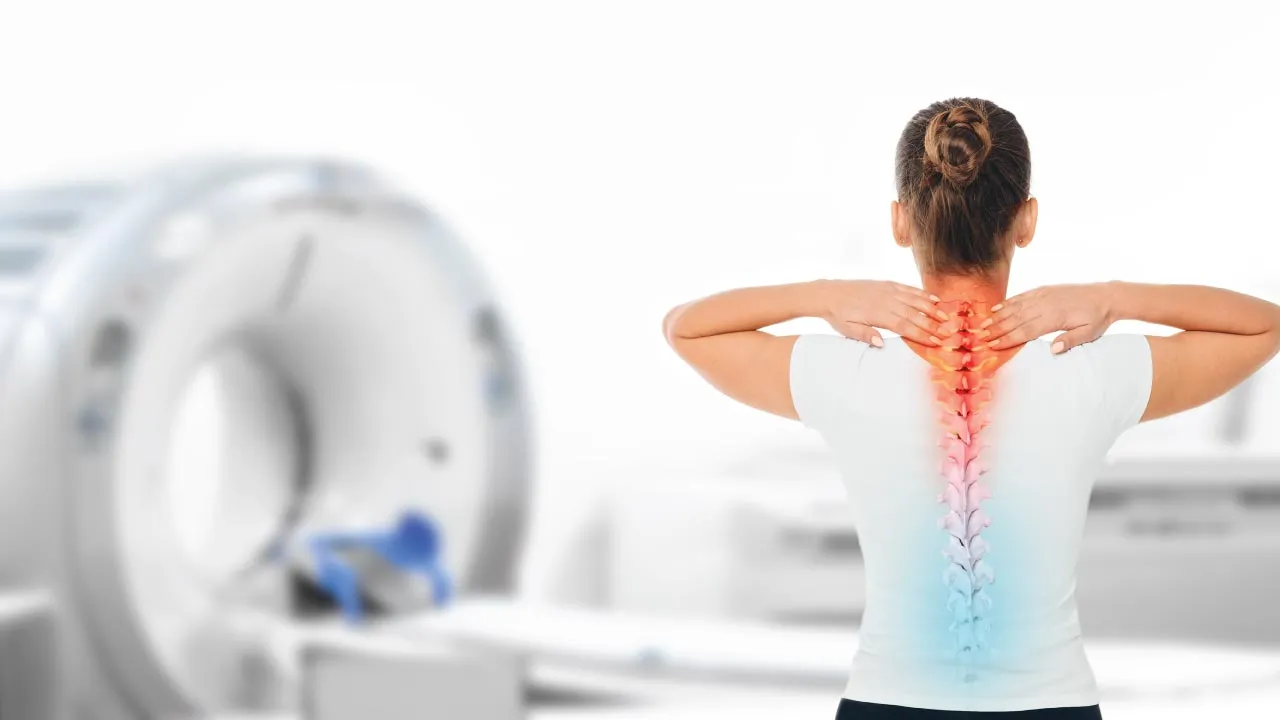
Reading the words “degenerative changes” on a neck MRI report can sound alarming.
You may immediately wonder whether your spine is damaged, whether the condition will get worse, or whether you need surgery.
In many cases, the word “degeneration” describes changes that develop gradually in the discs, joints, and other structures of the cervical spine. These changes become more common with age and may sometimes be present even in people who have little or no neck pain.
The important question is not simply whether degeneration appears on your MRI. It is whether the findings match your symptoms and examination.
What Does Degeneration Mean On A Neck MRI?
Your cervical spine contains vertebrae separated by discs that help absorb movement and load.
Over time, discs can lose some of their water content and become less flexible. The joints and surrounding structures can also develop changes.
An MRI may describe findings such as:
- Disc dehydration
- Disc height loss
- Disc bulging
- Bone spurs
- Facet joint changes
- Narrowing around nerves
- Narrowing of the spinal canal
These findings may occur together and are often described using terms such as degenerative changes or cervical spondylosis.
The wording can vary from one radiology report to another.
Does Degeneration Mean Your Neck Is “Worn Out”?
Not necessarily.
“Degeneration” is a medical description of structural changes. It does not automatically mean that your neck is severely damaged or that normal movement will be lost.
Some degenerative changes are part of the natural aging process.
This is why an MRI report should not be interpreted on its own. Your doctor needs to consider the findings alongside your symptoms, physical examination, age, medical history, and daily activities.
Can You Have Degeneration Without Neck Pain?
Yes.
Degenerative changes can sometimes be seen on imaging in people who do not have significant symptoms.
This is an important reason not to assume that every abnormal MRI finding is the direct cause of pain.
For example, an MRI may show a disc bulge, but if there is no corresponding nerve compression and your symptoms do not fit a nerve-related pattern, that finding may not be the main source of your discomfort.
What If The MRI Shows A Disc Bulge?
A disc can bulge beyond its usual boundary as part of degenerative changes.
A disc bulge does not automatically mean that a nerve is being compressed.
The clinical significance depends on factors such as:
- The size and location of the bulge
- Whether a nerve is compressed
- Whether the spinal canal is narrowed
- Your symptoms
- Findings during your physical examination
A doctor may therefore focus less on the presence of a bulge itself and more on whether it corresponds with your symptoms.
What Does Nerve Compression Mean?
The nerves that supply the arms travel through openings in the cervical spine.
If degenerative changes narrow these spaces, a nerve may become irritated or compressed.
This can cause symptoms such as:
- Pain that travels from the neck into the arm
- Tingling or pins and needles
- Numbness
- Weakness in the arm or hand
These symptoms can suggest cervical nerve involvement and may require a more detailed assessment.
What If The Spinal Cord Is Compressed?
Sometimes degenerative changes can narrow the spinal canal enough to affect the spinal cord.
This is different from simple neck pain or an incidental disc bulge.
Possible symptoms of spinal cord involvement can include problems with balance, difficulty walking, hand clumsiness, changes in coordination, or weakness.
If your MRI mentions spinal cord compression or you have symptoms that could suggest neurological involvement, timely medical assessment is important.
Does Cervical Degeneration Always Need Treatment?
No.
Treatment depends on your symptoms, examination findings, and the severity and location of the changes.
If symptoms are mild and there is no significant neurological problem, treatment may focus on non-surgical measures such as:
- Activity modification
- Physiotherapy or targeted exercises
- Improving posture and movement habits
- Pain management when appropriate
- Addressing factors that may aggravate symptoms
The specific treatment plan should be based on your individual condition.
When Might Surgery Be Considered?
Most people with degenerative changes on a neck MRI do not automatically need surgery.
Surgery may be considered in selected situations, particularly when there is significant nerve or spinal cord compression, progressive neurological problems, persistent symptoms despite appropriate non-surgical treatment, or another specific structural problem that requires surgical management.
The decision depends on the complete clinical picture rather than the MRI report alone.
How Should You Read Your MRI Report?
MRI reports can contain unfamiliar terms that sound much worse than they are.
Instead of focusing on one phrase such as “degenerative changes,” look at the report as a whole and discuss it with your doctor.
Useful questions include:
- Which MRI findings are actually relevant to my symptoms?
- Is a nerve being compressed?
- Is there spinal canal narrowing?
- Is the spinal cord affected?
- Do I have signs of cervical spondylosis?
- What treatment is appropriate for my symptoms?
- Do I need further evaluation or follow-up imaging?
This can help turn a confusing report into a practical treatment plan.
When Should Neck MRI Findings Be Evaluated Promptly?
Seek medical attention promptly if neck symptoms are accompanied by significant or worsening weakness, difficulty walking, problems with balance, loss of coordination, severe numbness, or changes in bladder or bowel function.
These symptoms can have different causes, but they may indicate neurological involvement that should not be ignored.
An MRI Finding Is Not The Whole Diagnosis
A neck MRI can provide valuable information about the spine, but the report is only one part of your evaluation.
“Degeneration” does not automatically mean severe damage, and it does not automatically mean surgery is required.
The most useful approach is to understand which findings are relevant to your symptoms and what they mean for your individual treatment plan.
Mamatha Spine and Regenerative Orthopedic Centre can help you understand your neck MRI findings in the context of your symptoms and guide you toward an appropriate treatment approach.
Frequently Asked Questions
Q: Is neck degeneration the same as cervical spondylosis?
A: Cervical spondylosis is a term commonly used for age-related degenerative changes in the cervical spine. Your MRI may describe specific findings such as disc changes, bone spurs, or joint changes rather than simply using the term cervical spondylosis.
Q: Can neck degeneration cause headaches?
A: Neck problems can sometimes contribute to certain types of headaches, but headaches have many possible causes. Your symptoms and examination are important for determining whether the neck may be contributing.
Q: Does a degenerative disc always cause neck pain?
A: No. Degenerative disc changes can be present in people who have little or no neck pain. The MRI findings need to be considered alongside your symptoms and examination.
Q: Does a neck MRI showing degeneration mean I need surgery?
A: No. Many people with degenerative changes are managed without surgery. Surgery is generally considered only in selected situations based on symptoms, neurological findings, structural changes, and response to appropriate treatment.
Q: Can cervical degeneration get worse with age?
A: Structural degenerative changes can progress over time, but the presence of degeneration does not necessarily mean that symptoms will continually worsen. Symptoms and imaging findings can vary considerably between individuals.
Q: When should neck degeneration be taken seriously?
A: New or worsening weakness, significant numbness, difficulty walking, balance problems, loss of coordination, or bladder or bowel changes should be evaluated promptly because they can indicate neurological involvement.

Mamatha Spine and Regenerative Orthopedic Centre is dedicated to providing advanced spine and orthopedic care in Bengaluru, helping patients move pain-free and live actively.


©2026 | Mamatha Spine and Regenerative Orthopedic Centre | All Rights Reserved | Digital Marketing by Remedo