Herniated Disc vs Bulging Disc: What Is The Difference?
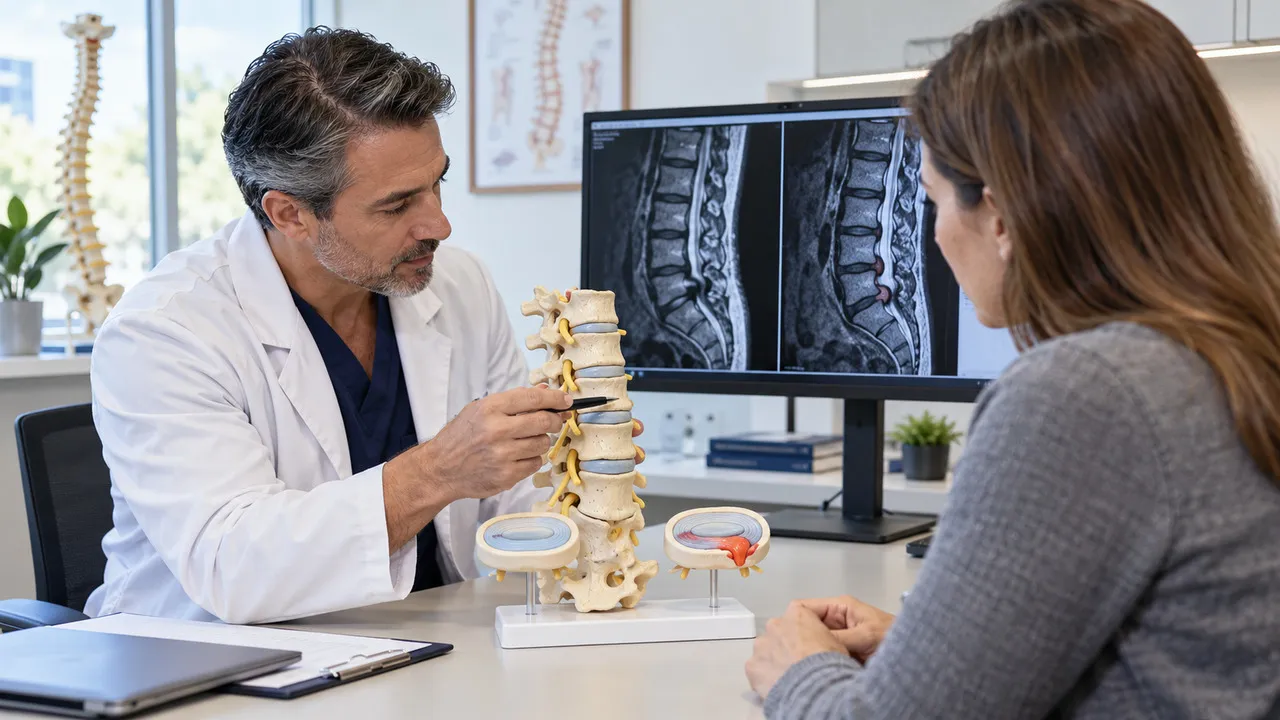
Back pain is extremely common, but not all spinal problems have the same cause. Two terms you may hear during a spine evaluation are bulging disc and herniated disc. Although they are sometimes used interchangeably, they describe different changes in the spinal discs.
Both conditions can occur in the discs between the vertebrae and may or may not cause symptoms. Understanding the difference can make it easier to understand your diagnosis and the treatment options your spine specialist may discuss.
What Are Spinal Discs?
Spinal discs are soft, flexible structures located between the bones of the spine. They act as cushions, helping absorb shock and allowing the spine to move comfortably.
Each disc has a tough outer layer called the annulus fibrosus and a softer, gel like center called the nucleus pulposus.
With age, repeated stress, injury, or normal wear and tear, the structure of a disc can change. These changes may result in a bulging or herniated disc.
What Is A Bulging Disc?
A bulging disc occurs when the outer portion of a spinal disc extends beyond its usual boundary.
The disc generally remains intact, but a larger portion of its circumference may extend outward. A bulging disc can occur gradually as part of age related changes in the spine.
Importantly, a bulging disc does not always cause pain. Some people may have disc bulges visible on an MRI without experiencing any symptoms.
Symptoms are more likely when the bulging disc irritates or compresses nearby nerves.
What Is A Herniated Disc?
A herniated disc occurs when part of the inner gel like material pushes through a weakened or damaged area of the outer disc layer.
Because the displaced material can come into contact with nearby nerves, a herniated disc may cause symptoms such as pain, numbness, tingling, or weakness.
A herniated disc is sometimes called a slipped disc, although the disc does not actually slip out of place.
Herniated Disc Vs Bulging Disc: The Main Difference
The key difference is how the disc material extends beyond its normal boundary.
With a bulging disc, the outer layer remains intact and extends outward more broadly. With a herniated disc, there is a more localized disruption or tear in the outer layer through which the inner disc material protrudes.
Neither condition automatically means that surgery is required. The importance of the finding depends on symptoms, nerve involvement, examination findings, and other factors.
What Symptoms Can Both Conditions Cause?
A bulging or herniated disc may cause no symptoms at all. When symptoms occur, they depend largely on the location of the affected disc and whether nearby nerves are irritated or compressed.
Possible symptoms include:
- Lower back or neck pain
- Pain spreading into the leg or arm
- Numbness or tingling
- Muscle weakness
- Burning or shooting pain
- Pain that becomes worse with certain movements
For example, a disc problem in the lower back may irritate a nerve that travels into the leg, causing symptoms commonly described as sciatica.
How Are They Diagnosed?
Your doctor will usually begin by asking about your symptoms and performing a physical examination. They may check your muscle strength, reflexes, sensation, and range of movement.
Imaging may be recommended when symptoms persist, are severe, or suggest nerve involvement.
An MRI scan can provide detailed images of the spinal discs, nerves, and surrounding structures. It can help identify disc bulging, herniation, and other causes of back or neck symptoms.
However, an abnormal MRI does not necessarily mean that the disc finding is responsible for your pain. Imaging results need to be interpreted alongside your symptoms and physical examination.
Does A Herniated Disc Always Need Surgery?
No. Many people with herniated discs improve with nonsurgical treatment.
Depending on the condition, treatment may include:
- Activity modification
- Physical therapy
- Pain relieving medications when appropriate
- Exercises to improve strength and flexibility
- Other conservative treatments recommended by a doctor
If significant nerve compression causes persistent symptoms, progressive weakness, or other concerning findings, a spine specialist may consider additional procedures or surgery.
The appropriate approach depends on the individual rather than simply whether an MRI shows a herniated disc.
Does A Bulging Disc Get Worse?
Not necessarily. A disc bulge may remain stable or may not cause symptoms at all. However, spinal discs can undergo further degenerative changes over time.
Maintaining appropriate physical activity, strengthening the muscles that support the spine, using proper lifting techniques, maintaining a healthy weight, and avoiding smoking can support overall spinal health.
Your doctor or physical therapist can recommend activities that are appropriate for your condition.
When Should You Seek Medical Attention?
Back or neck pain often improves with time, but certain symptoms require prompt medical evaluation.
Seek urgent medical attention if back pain occurs with:
- New or worsening weakness in an arm or leg
- Significant numbness
- Loss of bladder or bowel control
- Numbness around the inner thighs or genital area
- Severe pain following a significant injury
These symptoms can indicate serious nerve compression and should not be ignored.
What Matters More: The MRI Or Your Symptoms?
An MRI can provide valuable information, but the scan is only one part of the diagnosis.
Disc bulges and herniations can be present in people who have little or no pain. Therefore, treatment decisions should consider the complete picture, including your symptoms, physical examination, imaging findings, overall health, and response to initial treatment.
A spine specialist can help determine whether a disc abnormality is actually contributing to your symptoms.
Understanding Your Disc Diagnosis
Hearing the words bulging disc or herniated disc can be concerning, but neither diagnosis automatically means that you need surgery. Many people can manage their symptoms with appropriate nonsurgical care.
If you are experiencing persistent back or neck pain, numbness, tingling, or weakness, Mamatha Spine and Regenerative Orthopedic Centre can help assess the underlying cause and guide you toward an appropriate treatment plan.
Frequently Asked Questions
Q: Is a herniated disc worse than a bulging disc?
A: Not necessarily. A herniated disc involves localized disruption of the outer disc layer, while a bulging disc involves broader outward extension of the disc. The severity depends more on symptoms, nerve compression, and the individual's clinical findings than on the label alone.
Q: Can a bulging disc become a herniated disc?
A: A disc can undergo progressive structural changes over time, but a bulging disc does not automatically become herniated. Factors such as age related degeneration, repeated stress, and injury can contribute to changes in disc structure.
Q: Can a bulging disc cause sciatica?
A: Yes. If a disc bulge irritates or compresses a nerve in the lower spine, it can cause pain, tingling, numbness, or weakness that travels into the leg. This type of nerve related pain is commonly referred to as sciatica.
Q: Can a herniated disc heal without surgery?
A: Many herniated discs improve with nonsurgical treatment. Depending on the symptoms, treatment may include physical therapy, activity modification, and medications when appropriate. Persistent or severe nerve symptoms may require further evaluation.
Q: Does every disc bulge cause back pain?
A: No. Disc bulges are common, particularly with increasing age, and some people have them without any symptoms. A doctor considers the MRI findings together with the patient's symptoms and physical examination.

Mamatha Spine and Regenerative Orthopedic Centre is dedicated to providing advanced spine and orthopedic care in Bengaluru, helping patients move pain-free and live actively.


©2026 | Mamatha Spine and Regenerative Orthopedic Centre | All Rights Reserved | Digital Marketing by Remedo